


Sixteen minutes into “Obsession” — the massively popular, shoestring-budget horror film breaking box office records and bucking expectations left and right — writer-director Curry Barker gives it all away. Driving home from bar trivia, best friends and coworkers Bear (Michael Johnston) and Nikki (Inde Navarrette) chat about life, and all the differences between where they are and where they want to be. Bear can barely hide the hearts in his eyes as Nikki speaks, wondering if this might finally be the time to confess his love for her, when she beats him to the emotional punch: She’s fed up with her job and has put in her two-week notice. Nikki wants to write full-time and believes that a lack of love in her life is stifling her manuscript. The word piques Bear’s curiosity, causing him to wonder aloud if Nikki’s writing a romance. “It’s not a romance, it’s a love story,” she immediately corrects him. Laughing, Bear replies: “Isn’t that the same thing?”
As “Obsession” so painstakingly reminds the viewer over the next 90-some minutes, a romance and a love story are not the same thing, and our ability to so easily confuse the two is Barker’s point. Love is overwhelming but can still be one-sided, an imbalance that love’s all-consuming nature disguises. Romance, on the other hand, implies a unique feeling two people share, a spark that can be nurtured together as their lives intertwine. “Obsession” is the latter: a tale of love and all of its foibles and frailties, devoid of any actual romance — something that, given the extended pause after Bear’s question about their interchangeability, Barker clearly wants the audience to remember.
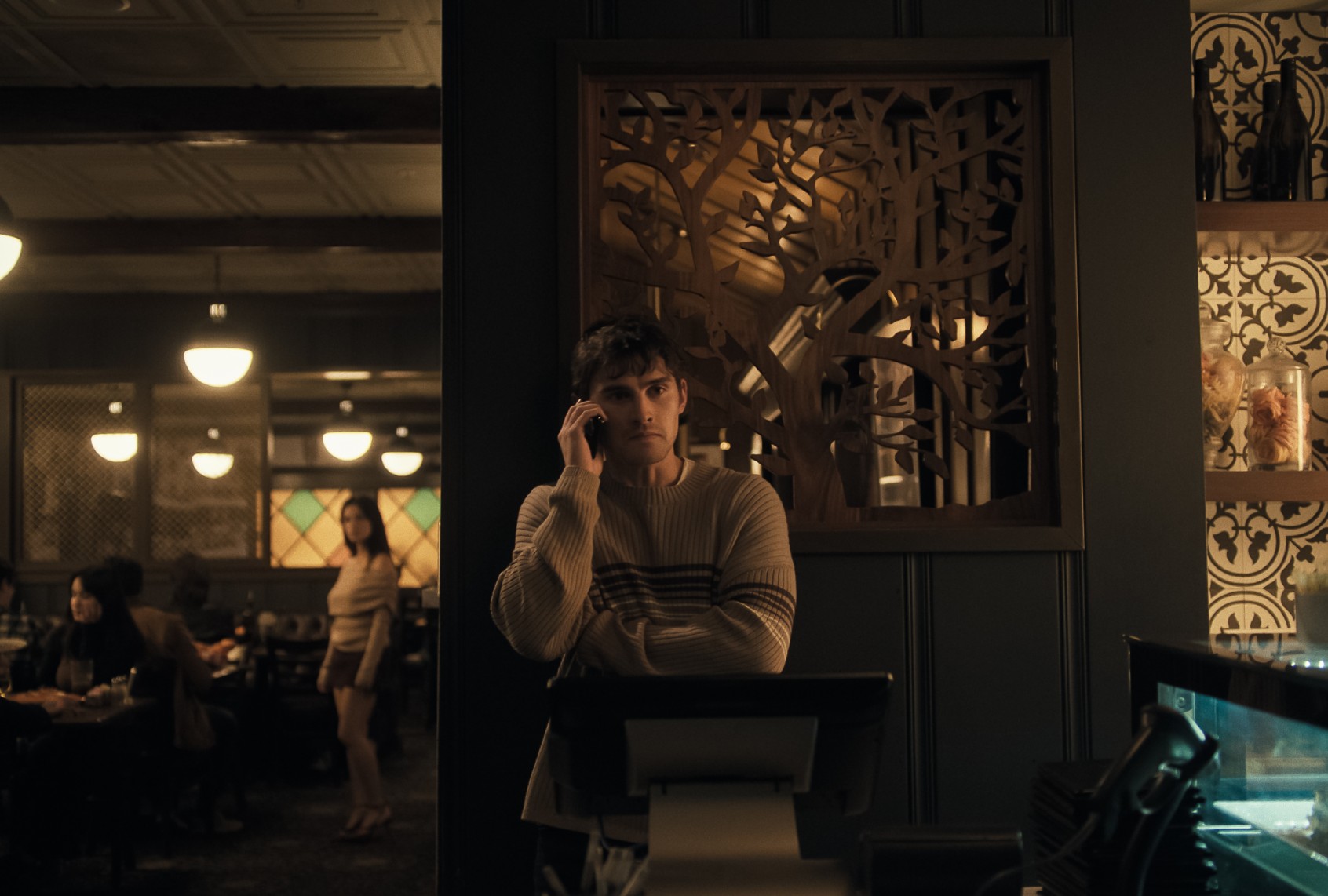
(Focus Features) Inde Navarrette as Nikki and Michael Johnston as Bear in “Obsession”
In the end, all that’s left is another thinly written woman in horror, camouflaged by tongue-in-cheek jokes and flimsy progressive ideas. It’s a disguise “Obsession” wears so well that it’s fooling people into thinking this perfectly adequate film marks the arrival of a new horror classic.
Barker wisely plants this tension in the screenplay without drawing too much attention to itself, folding it into the natural progression of a conversation between two close friends. This surreptitious screenwriting trick serves two functions. The first purpose is to keep the audience laser-focused on the differences between love and romance, leading them to believe that observing the distinction is their own doing, not something Barker goaded them into. The second reason, however, is more insidious. Spoon-feeding this critical bit of dialogue early in the film allows Barker to heap as much violence, trauma and tropes onto Nikki’s character as possible, under the guise of thematic callbacks. Each bit of misogynistic framing and objectification Nikki suffers can be defended as a means to an end. “This is all to convey the consequences of Bear — and men as a whole — not understanding that love and romance aren’t the same thing,” one might say.
But held under a magnifying glass and removed from the film’s fervent fanfare, those arguments fall apart. Barker’s movie is packed with familiar beats about obsessed women stalking men, and just as riddled with their stale narrative pitfalls, with one or two novel ideas peppered into the mix to freshen up the clichés. In the end, all that’s left is another thinly written woman in horror, camouflaged by tongue-in-cheek jokes and flimsy progressive ideas. It’s a disguise “Obsession” wears so well that it’s fooling people into thinking this perfectly adequate film marks the arrival of a new horror classic.
To be both fair and perfectly clear, enjoying “Obsession” isn’t a stain on someone’s intellect or an indication of their moviegoing acumen. Like many horror films, it’s entertaining even when it’s simply decent. Barker, who has directed feature-length films for his successful YouTube channel but makes his foray into theaters with “Obsession,” is a promising filmmaker, and the cast — particularly Navarrette, who makes Nikki as frightening as she is heartwrenching — is largely excellent. The film is well-paced, if occasionally repetitive, and approaches the hackneyed wish-gone-wrong formula with some unique panache.
What irks me is how one-note the character writing is, and how the movie’s youthful, seemingly forward-thinking perspective allows Barker to get away with reducing Nikki to nothing. Fashioning “Obsession” as a take on male loneliness is a deceptively simple way to invalidate criticism of the movie’s misogynistic execution, like an escape hatch for the YouTuber who grew up copy-and-pasting fair use legalese in their video descriptions.
Nikki’s interiority ceases only a moment after that fateful conversation about love and romance on the way home from the bar. Worried that not working together might drive a wedge between their closeness, Bear sees Nikki inside before making a wish on a mystical “One-Wish Willow” for Nikki to “love [him] more than anyone else in the world.” Already, the viewer gets their first chance to relish their observantness. Bear was too wrapped up in his own fantasies to consider Nikki’s sentiment about love and romance — what harm could the syntax of a wish on a rinky-dink novelty item really do? — and is about to pay the price. The cost for Nikki, though, is significantly steeper. From the second Bear breaks the willow, the real Nikki and Wish Nikki are warring inside one body, fighting to be the one who has control, and rarely will power be granted to the real Nikki. That means Navarrette had less than 20 minutes to convey an entire lifetime’s worth of depth, and will spend the remainder of the movie locked in a violent degradation.
Want more from culture than just the latest trend? The Swell highlights art made to last.
Sign up here
From here, “Obsession” is largely paint-by-numbers. If you’ve seen any Monkey’s Paw media or caught even a stray episode of “The Fairly OddParents” growing up, it’s simple to predict where the film is headed and how it will get to its destination. Ruin is certain. What’s slightly more vague is the extent Barker is willing to go to in conveying just how intense the terms of Bear’s wish really are. The next morning, when Bear wakes up to Nikki fashioning a memorial for his recently deceased cat, complete with its blood on the floor, flies buzzing, and a prayer candle lit, it’s obvious Barker has no intent on starting small. What follows is a veritable game of “Guess Which ‘Crazy Woman’ Tropes We Can Get Away With by Making Nikki’s Actions Involuntary”: more animal violence, a torrent of brutal jealousy, unnerving possessiveness, gross-out toilet gags — they’re all here, slapped with a new coat of paint.
Where the film becomes truly interesting and innovative is also where its narrative’s most imposing roadblock lies. As the severity of Nikki’s obsession heightens, we get a few brief glimpses of the real Nikki, stuck somewhere inside her own consciousness. In Navarrette’s hands, this push-pull between good and spiritual evil is gripping. A fleeting peek at the actual Nikki reminds us that she’s conscious of everything that’s happening to her — all that she’s doing and saying can be felt and heard, but there’s nothing she can do about it. It’s a cruelty that Navarrette plays with aplomb, using slight changes in her facial expressions and almost imperceptible eye movements to convey the differences between the two versions of her character.
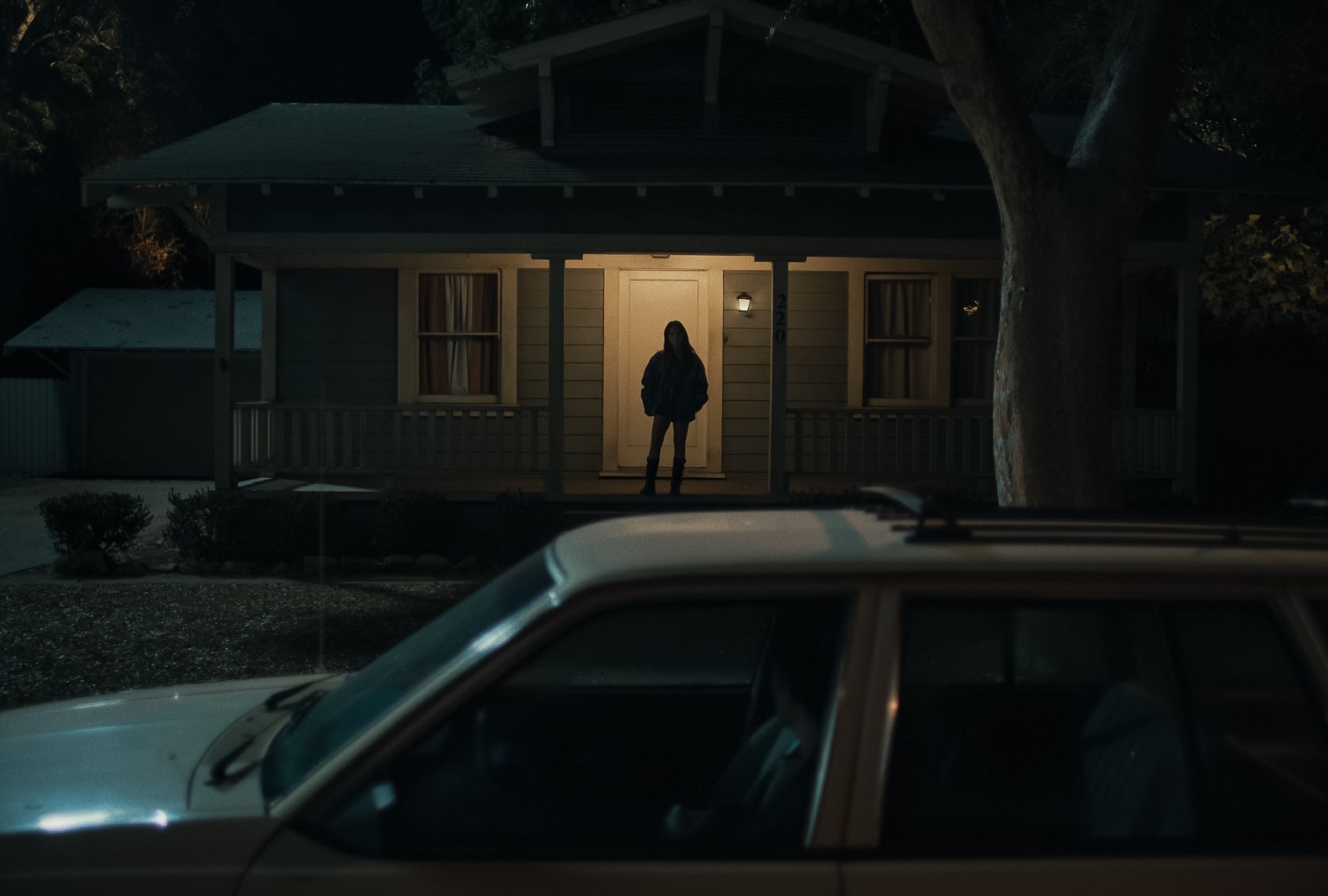
(Focus Features) Inde Navarrette as Nikki in “Obsession”
The problem is that these moments are imbalanced, outweighed by the amount of time spent watching Wish Nikki do terrible things and Bear suffer the consequences. If the purpose of making Nikki into a freak show is to comment on the evil women endure at the hands of men, even inadvertently, the viewer deserves more than just a cursory look at the real person beneath the wish, the fleeting remnant of a person that they’re supposed to be sympathizing with.
Barker has said that, in writing the film, he wanted to explore the fear of men “not saying the right thing, or not wanting to come off like a creep.” And while those apprehensions are examined in the film, they’re never once investigated from Nikki’s point of view. The concerns that a quote-unquote “good” guy might have while dating — or, in Bear’s case, trying to date — in the modern age would be infinitely more compelling from the woman’s perspective. What does Bear’s forced projection of their imagined romance feel like for Nikki? What repercussions are there for her? The viewer never gets more than a passing peep.
Fashioning “Obsession” as a take on male loneliness is a deceptively simple way to invalidate criticism of the movie’s misogynistic execution, like an escape hatch for the YouTuber who grew up copy-and-pasting fair use legalese in their video descriptions.
The film’s terror comes from watching a woman be reduced to an absolute shell of herself. Nikki is nothing more than her pain and deterioration because Barker doesn’t allow us any other prolonged glimpses of Nikki or her life after Bear makes his wish. To tout that total lack of characterization as unique or revolutionary is a joke. We’ve been forced to watch women beg to die — the sick male fantasy of absolution rewarded through more brutal violence — enough in this life. This is precisely how men have written women in horror for decades: as roads for men to trample over and subjugate on their journey to either destruction or enlightenment.
It doesn’t matter that Nikki’s lack of interiority reflects Bear’s perception of her. Her complete one-sidedness is still indicative of a man’s point of view. That Nikki’s parents are repeatedly and affectionately alluded to, yet somehow never come around asking where their daughter has been for weeks, confirms that Barker has no desire to spend any more time exploring the real Nikki’s life than Bear does. What a shame, considering a three-dimensional approach might be all “Obsession” needs to skate past mediocrity.
Why, then, has the response to “Obsession” been so effusive? Its journey to the silver screen is one major component. Made on a budget of just $1 million, it’s an undeniably impressive feat that looks and feels far more expensive than it really was. It’s also the kind of success story that theatergoing audiences love to champion, and that fairweather viewers find intriguing enough to check out themselves. But most of all, Barker spotted a hole in the market. Gen Z and Gen Alpha aren’t so fatigued by Monkey’s Paw tales because horror’s cyclical nature hasn’t yet completely revamped this trope for a new era. Barker wisely fashioned “Obsession” as a contemporary movie, taking inspiration from a “Simpsons” rerun and revamping it into something the socially conscious, explainer video-addicted YouTube audience might enjoy.
Spring savings are here!
But Barker only glances at a few relevant themes before turning his gaze just when things are getting interesting. “Obsession” has ideas about our age of instant gratification and parasocial idealization fueled by social media that the film never manages to do anything more than wag a finger at. One might say it works as a commentary on incel culture, but that collapses the more Barker paints Bear as an unwitting victim of his own perfectly normal hopes and dreams. “Obsession” desperately wants to be a modern film, but can’t do anything more bold than gesturing to the bleakness and incessant discourse this reality is mired in.
If this spring’s “The Drama” still managed to polarize some viewers and critics with thorny yet palatable gender dynamics, “Obsession” is its dull cousin: all tell, no show. Where the former implemented carefully considered, brief glimpses of its female lead to shade her character’s textures, “Obsession” stops caring about Nikki the moment her silhouette is completed. How ironic that this is so often how she appears in the film: shrouded in darkness, barely visible, her eyes glowing through the shadows and begging for someone to see the real her. Barker has no interest in shining some light on Nikki when keeping his woebegone protagonist in the dark is scarier. There, she can be any version of what the audience believes an obsessed woman might act like — what outrageous and unpredictable things she might do next. Nikki is still the fantasy for viewers to project themselves onto. She remains an archetype. All that’s changed is which angle she’s approached from.
Read more
about horror’s new guard
The post The misplaced obsession over “Obsession” appeared first on Salon.com.
from Salon.com https://ift.tt/zOexE6W

 Hello, my name is Asma E Nur. I am a tech blogger.
No comments:
Post a Comment