


Recently I went with Hanh Nguyen, Salon’s Executive Editor for Culture and Food, to the ATX Television Festival, where we enjoyed illuminating panels on all things TV, along with fun side missions. A favorite stop, sponsored by Britbox, invited participants to be digitally inserted into their favorite U.K. television genre based on their photos. Yes, yes, AI is evil. But as sins go, this one was tough for two diehard British mystery fans to resist.
Eventually, we settled on a cliffside mystery frame:
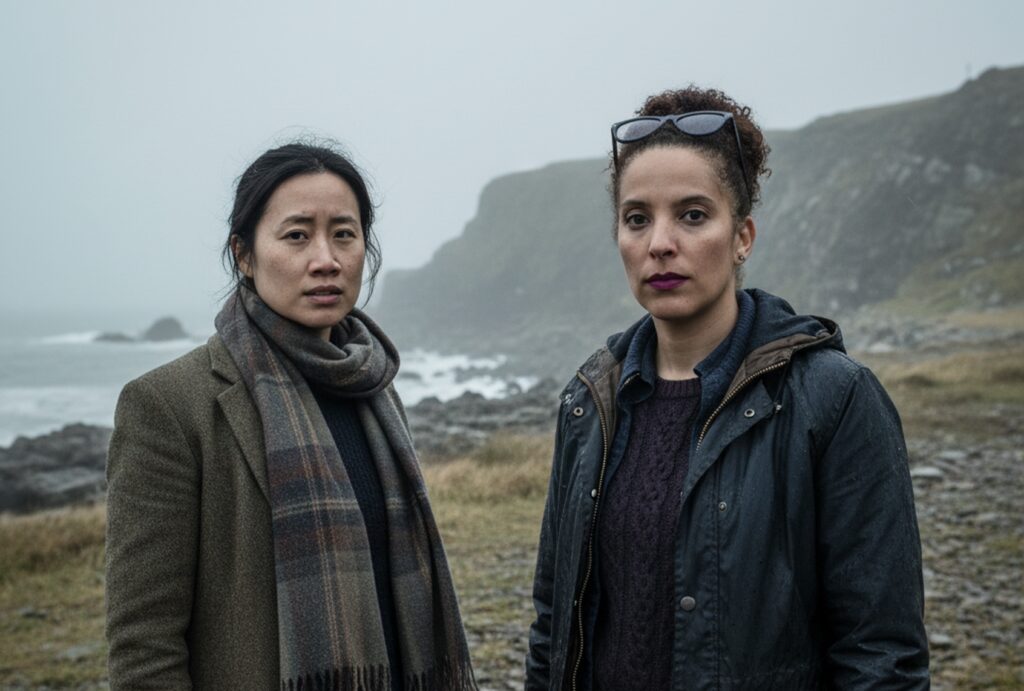
(BritBox) AI illustration, courtesy of BritBox
When it was time for my solo outing, I chose an archetype much closer to my heart: the cozy crime solver.
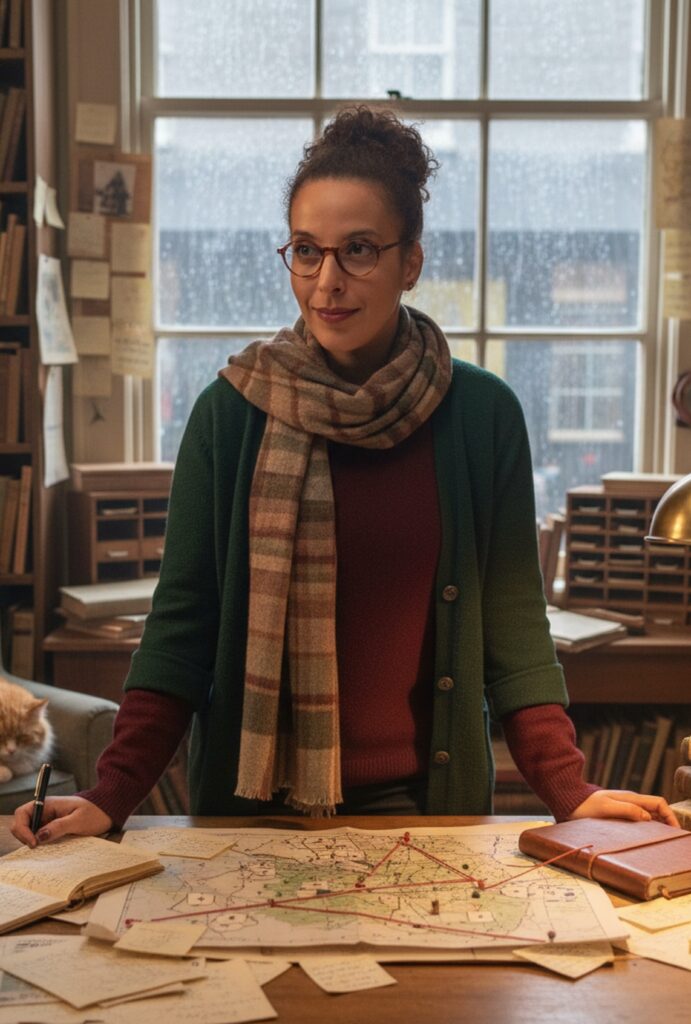
(BritBox) AI illustration, courtesy of BritBox
There are some things that the British simply do better. Cozy mysteries top that list. Where Americans think of graphically violent procedurals as comfort watches, the British prefer their TV homicides to be much tidier: Serious violence occurs offscreen. The cops are jaded and too easily steered toward the wrong suspects, moving the gentle citizen gumshoe to step in and offer her gifted expertise.
These hobbyist hawkshaws view homicide cases as puzzles, while the people linked to them, guilty or innocent, are the tougher cases to crack. We have our own versions of such Agatha Christie-inspired sleuths; the “Only Murders in the Building” trio immediately comes to mind as well as “Elsbeth” and “Poker Face,” along with all manner of descendants of Jessica Fletcher from “Murder, She Wrote.”
One character we haven’t cracked as successfully as our U.K. cousins, however, is the clergyman detective — odd, given our culture’s puritanical bent.
Next to the likes of “Grantchester,” which has its 11th and final season making its stateside debut on “Masterpiece,” American TV’s attempts to place an ecclesiastical spin on the murder mystery have been, shall we say, ineloquent.
In his post-“Happy Days” run, Tom Bosley gave us three seasons of “Father Dowling Mysteries” on NBC and ABC. It was a very nice way to kill time with grandma, and not much more.
Before that, Robert Blake — yes, that Robert Blake — battled street-level sin while wearing a clerical collar in the short-lived 1985 disaster “Hell Town,” a show whose only saving grace is its kooky theme song performed by Sammy Davis Jr.
You can’t fault its producers for a lack of creativity.
Reaches like this, though, exemplify why British TV is lousy with priestly investigators like the ones ministering to the village of Grantchester or “Father Brown”: They are extensions of a long literary tradition in Britain and other parts of Europe (for example, “The Name of the Rose”). Father Dowling is based on a character from American author Ralph McInerny’s mystery novels that borrowed elements from Father Brown, the O.G. of this TV subgenre.
That good Father, a Catholic priest blessing the Cotswolds, comes from a series of stories G.K. Chesterton published between 1910 and 1936, and inspired a radio drama, several movies and several TV adaptations. Britain’s first version aired in 1974. Nearly four decades later, in 2013, BBC Studios Drama Productions reintroduced the character to a modern audience with Mark Williams in the title role, and it’s been rolling ever since, broadcasting in 235 territories around the globe.
Spring savings are here!
The success of “Father Brown” rests in the way Williams plays with the notion of the priest as a quiet, trustworthy confessor. He’s barely remarked on when he enters a room and yet, as a representative of God and the Church, he has a knack for seeing situations clearly, broadly and with insight. “Father Brown” even spawned a spin-off, “The Sister Boniface Mysteries,” which has been airing on BritBox since 2022.
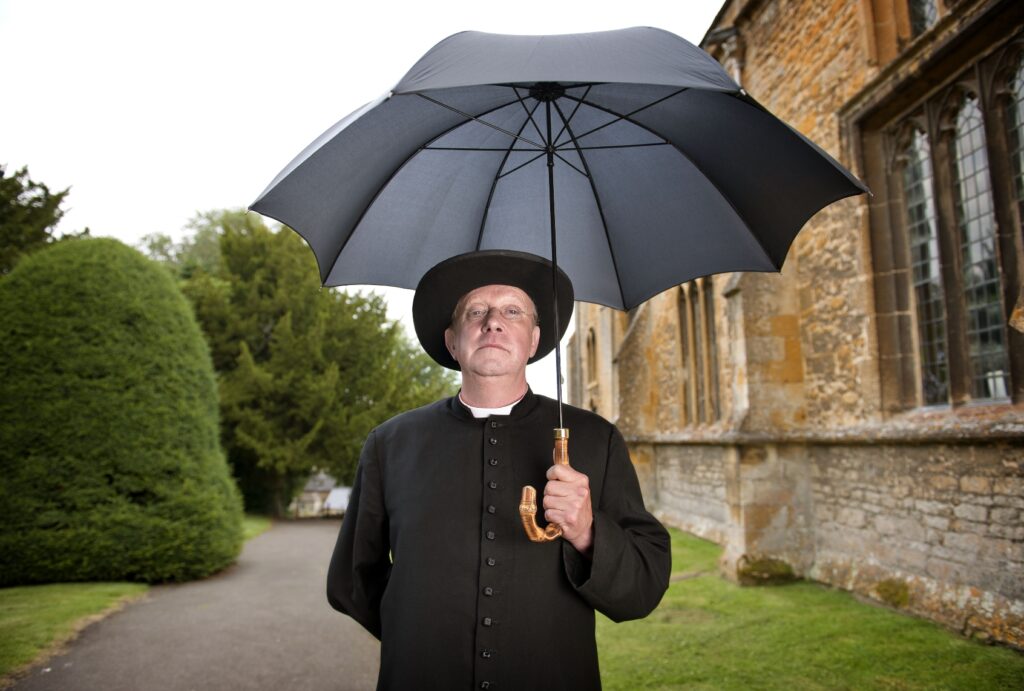
(BritBox) Mark Williams in “Father Brown.”
“Father Brown,” “Sister Boniface” and “Grantchester” share another cozy aspect that’s uniquely British — they’re all set in close-knit villages and take place in the 1950s and ‘60s. These stories unfurl far away enough from the tumultuous social revolutions shaking up other Western countries, but aren’t so detached as to claim they’re untouched by the ills wrought by colonialism and prejudice.
These hobbyist hawkshaws view homicide cases as puzzles, while the people linked to them, guilty or innocent, are the tougher cases to crack.
I’ve always respected the resolute sensitivity and complexity written into ITV’s adaptation of James Runcie’s “Grantchester” mysteries. Aspects of the TV drama structurally resemble some American crime shows in that its main constant has been Robson Green’s hardened Detective Inspector Geordie Keating.
The other is its parish, the spiritual center of this Cambridgeshire hamlet and a place where community members weave themselves in each other’s lives while supporting its rectors. Over its 11 seasons, “Grantchester” has featured three vicars, with the latest and last, Alphy Kottaram, played by Rishi Nair. Before Alphy, past seasons featured arcs about its citizens and vicars confronting bigotry. One follows the church’s kindly Leonard Finch (Al Weaver), a gay man navigating his faith and good works despite having his curate’s license stripped from him when he’s outed.
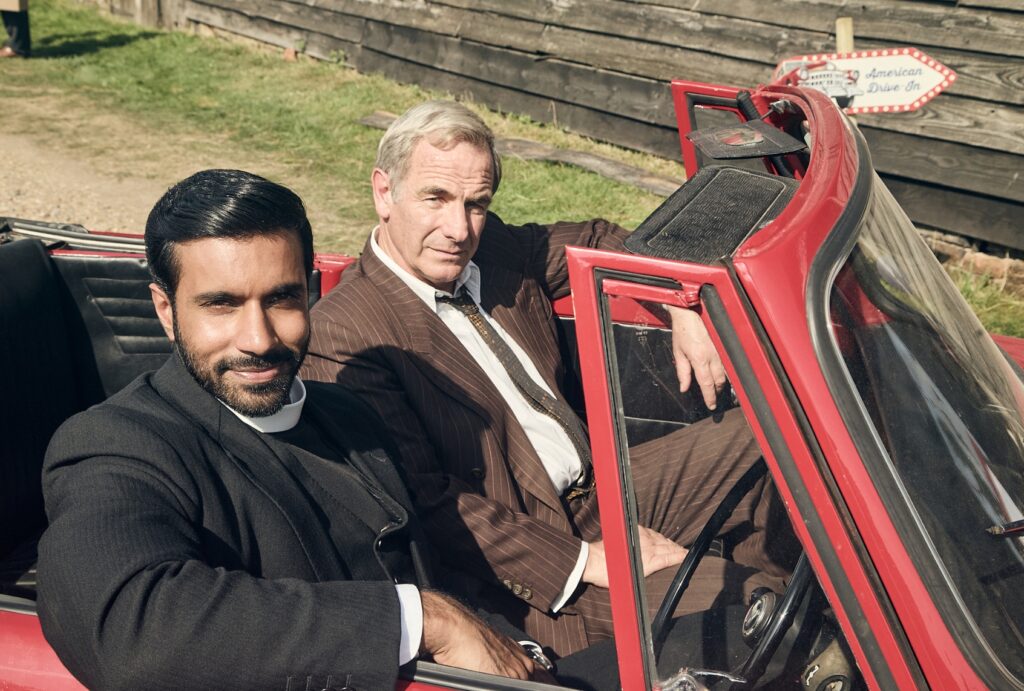
(Courtesy of Kudos and Masterpiece) Rishi Nair as Alphy Kottaram and Robson Green as Geordie Keating
Alphy, meanwhile, contends with the ever-present racism in British society. Regardless of how loving this mostly white community is toward him, there are still plenty of people taken aback at the sight of a brown man wearing a clerical collar and preaching from an Anglican church’s pulpit.
One is his long-estranged birth mother, who at last shows up in Alphy’s life for an auspicious celebration but may not be entirely ready to embrace him. This gripping meditation on heartbreak comprises the vicar’s final emotional arc. Fingering a killer is the main mission, of course, and there are new ne’er-do-wells each episode. But with a few exceptions, they don’t tend to be as fascinating as the day-to-day mystery of risking one’s faith in other people.
Divine understanding is one of the coziest concepts around, after all. Most of the time, it’s comforting. But in some instances, it roots out the reasons we do evil to each other, inviting us to consider our human frailty. “Grantchester” may be ending, but “Father Brown” endures because its homilies champion the belief that good exists in everybody, even in the hearts of those who commit mortal sin.
“Masterpiece: Grantchester” airs at 9 p.m. Sundays on PBS member stations.
Want more from culture than just the latest trend? The Swell highlights art made to last.
Sign up here
Read more
from Salon’s Culture newsletter, The Swell
The post The coziest TV mysteries have a higher calling appeared first on Salon.com.
from Salon.com https://ift.tt/BajF8z4

 Hello, my name is Asma E Nur. I am a tech blogger.
No comments:
Post a Comment