


It seems like there’s a new celebration of the “Saturday Night Live” legacy every other month at this point. Last year, there was the late-night variety show’s 50th anniversary special, a star-studded affair with cast members old and new, celebrities aplenty, musical performances, sorely missed recurring characters from the days of yore, and plenty of jokes at the expense of the show’s creator and producer, Lorne Michaels. To accompany the special, Peacock aired the four-part docuseries, “SNL50: Beyond Saturday Night,” diving deep into aspects of the show fans don’t often get an intimate glimpse of. Then, there was “Ladies and Gentlemen . . . 50 Years of SNL Music,” a feature-length documentary directed by Questlove about the show’s truly iconic and totally unique musical performances. And then there was the 2024 narrative feature, “Saturday Night,” where a slew of young actors and comedians stepped into the shoes of the not-ready-for-primetime players cast in the series’ first season, documenting the lead-up to the first-ever episode in real time.
In Morgan Neville’s new documentary about the man, the myth, the legend Lorne Michaels, fittingly titled “Lorne,” talking heads muse that “little in TV has been explored as much as that first season [of ‘SNL’].” And Michaels himself — that is, when Neville gets him mic’ed when he’s not trying to give the cameras a slip — seems to agree. Neither Michaels nor Neville seems particularly interested in spending this documentary rehashing those early days of “SNL.” (Though the documentary does retread some of the ground covered in the recent docuseries about the show.) Rather, they’re keen to offer a backstage glimpse into the series’ extensive, storied production process to highlight why “SNL” has stood the test of time in ways that NBC-sanctioned media can’t always give audiences. It’s not exactly raw, but it is unapologetic; a more authentic and appropriately ridiculous look at the only show of its kind to last this long.
(Focus Features) Lorne Michaels stars in director Morgan Neville’s documentary “Lorne”
“Lorne” speeds past the horror stories of coked-up late writing nights and overworked employees. Those tales are all par for the course at this point. The film isn’t excusing these rough working conditions, but it’s not a puff piece, either. Instead, Neville tries to communicate his subject’s belief that the best, strangest and funniest ideas come from the most unexpected places.
“Lorne” frames Michaels as a caring but stoic presence, as tender as he is esoteric. More critically, the film questions how and if “SNL” can continue without Michaels, stressing that he is the key ingredient to the show’s success. At times, it feels like a victory lap, the most flattering possible portrait of a man who might be toying with the idea of going out while he’s still on top. But when Neville digs deep down to the heart of the matter — when he gets Michaels talking, or points his camera in the right direction at a precise moment — he captures the spirit of “SNL.” This isn’t just a late-night comedy variety show, and it’s not enough to deem it a major cultural institution, either. “Saturday Night Live” still sparks the imagination and drives the conversation after all these years because it’s writer-focused. It’s a series exploding with ideas and risks in equal measure. The show lives and dies by the people behind the camera, not in front of it. And in a culture so hellbent on idol worship and exhausting discourse, where every blemish is smoothed out or screamed at, “SNL” still offers us something scrappy and unvarnished. No wonder we can’t seem to stay away, no matter how hard we try.
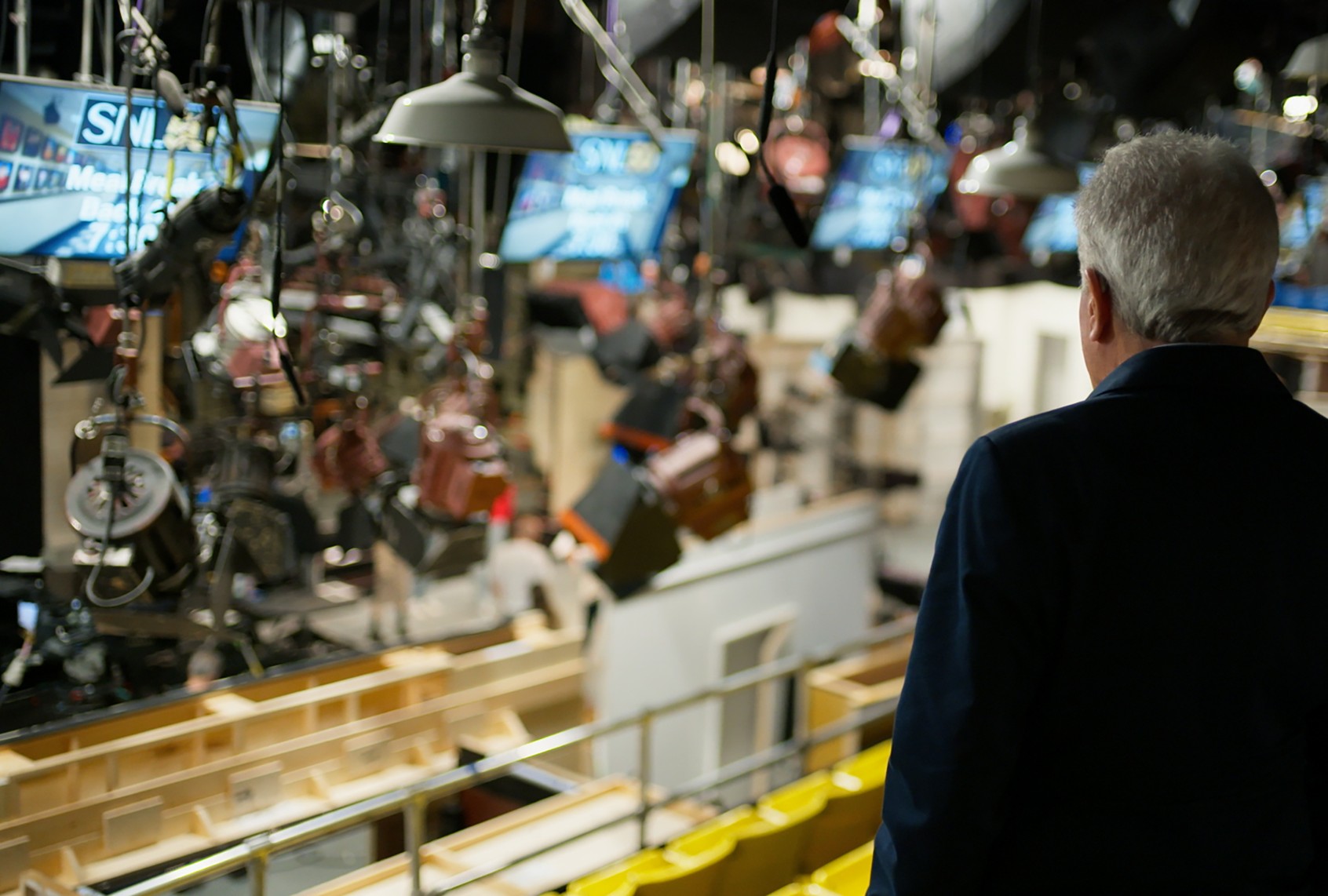
Even those familiar with the process at “SNL” will find Neville’s depiction of it fascinating, even somewhat novel. “Lorne” walks viewers through the Monday-to-Saturday schedule, interspersed with memories from cast members, writers, producers and NBC execs past and present. The film emphasizes the pivotal importance of each day’s routine, without making it look as stressful as it’s known to be. “Lorne” speeds past the horror stories of coked-up late writing nights and overworked employees; those tales are all par for the course at this point. The film isn’t excusing these rough working conditions, but it’s not a puff piece, either. Instead, Neville tries to communicate his subject’s belief that the best, strangest and funniest ideas come from the most unexpected places. Often, that’s during Tuesday writing nights, where writers typically work until sunrise. “The unconscious takes over,” Michaels says. When the film cuts to the pages of a sketch-in-progress, closing in on the words “VFX: Medium Fart,” one wonders whether the fart was a risk Michaels was ultimately happy with or if, in the case of thousands of other sketches, it was cut.
The truth of “SNL” is that there’s no way to really know for sure if it will play with an audience until the sketch gets in front of one. For many, that never happens. At one point, cast member Mikey Day does a rough calculation and estimates that Michaels has read somewhere in the realm of 28,350 sketches. At the Wednesday table reads, Michaels trims the initial 60 sketches down to 40, and spends the next four hours reading through each and every one with the cast and that week’s host. It’s a draining process, but one that Michaels admits he can’t let go of, no matter how old he gets or how much he wants to. To see someone care as much about the minute details of their work as he does is a rare thing for someone of Michaels’ caliber. He could easily cash his checks and go. But, as Neville and those interviewed for the film stress, it wouldn’t be the same “SNL” without Lorne’s invisible touch. “A good producer leaves no fingerprints,” Michaels says. That may be true, and yet, Michaels’ influence remains in every frame of every episode.
Want more from culture than just the latest trend? The Swell highlights art made to last.
Sign up here
That’s something that’s always struck me as singular. How many television shows are there where fans are highly familiar with the habits and penchants of the show’s producer? I can’t think of many, but if you ask any “SNL” diehard — even just a regular viewer — about Michaels, they’ll likely prattle off some fun facts to you. His incessant love of popcorn. His favorite restaurants. The fact that he hates it when cast members break during a sketch, even though viewers love it. These are all facets of Michaels covered in the documentary, but I learned them back in my Tumblr days, when I’d spend my teenage years liveblogging episodes with friends online.
The late ’00s era of “SNL,” stretching into the new decade, is revered as one of the show’s strongest. Viral sketches and digital shorts occurred as frequently as new fan-favorite characters. The show was firing on all cylinders, and watching live every Saturday night with both my family and the anonymous crowd of people I knew online was an experience unlike any other. To me, it felt like being a part of history. (During the 2008 election season, when one could count on Tina Fey to appear as Sarah Palin, it really was history, as evidenced by Julianne Moore’s cutting turn as Palin in the underrated HBO film “Game Change.”) When you can make a viewer in any part of the country feel connected to the world in that way, it’s a special experience. And no matter how much some argue that “SNL” is a show for coastal elites, “Lorne” correctly argues that Michaels understands the people of middle America, even if every sketch isn’t always tailored to their interests. For what it’s worth, this former North Dakotan certainly loved it.
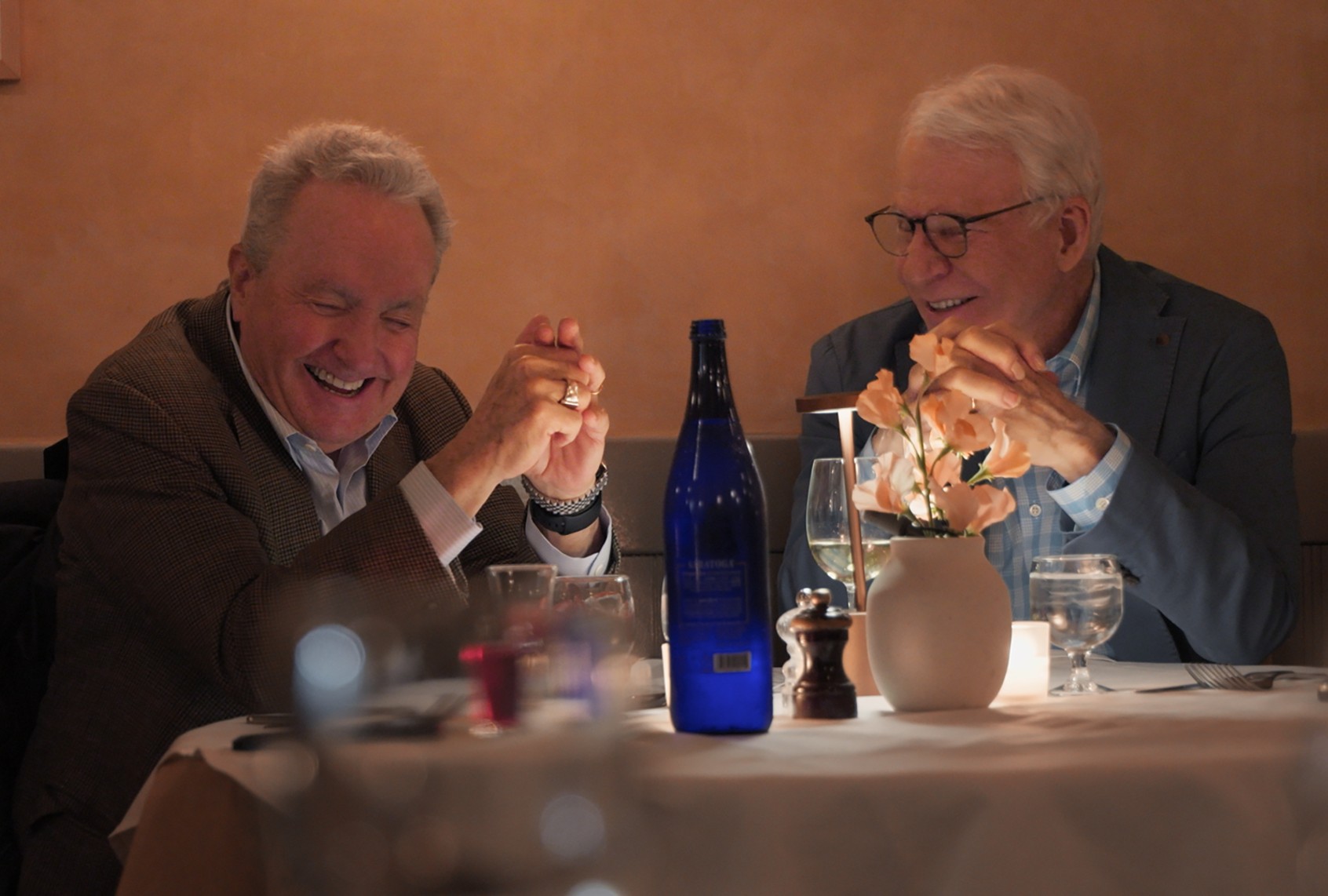
Lorne Michaels and Steve Martin in director Morgan Neville’s documentary “Lorne”
But that hasn’t always been the case since. I’ve soured on “SNL” more times than I can count in the past decade or more, not only aggravated by Michaels’ willingness to give Donald Trump a platform to humanize someone who had the distinct makings of a fascist in training, but because the humor just doesn’t cut it like it used to. I was surprised to see “Lorne” touch on both of these factors, and even more startled to find myself respecting Michaels’ reluctance to apologize for any of his decisions. For all of the bad, there’s good, too. Michaels egged Norm Macdonald on during Weekend Update, encouraging Macdonald to keep going after O.J. Simpson, despite how much NBC producer Don Ohlmeyer — one of Simpson’s closest friends — hated it. Michaels didn’t just stand by his writers; he risked the longevity of his show.
Watching live every Saturday night was an experience unlike any other. To me, it felt like being a part of history. When you can make a viewer in any part of the country feel connected to the world in that way, it’s a special experience.
That longevity is always in peril if the sketches aren’t funny. When I tune into “SNL” these days, I find myself getting an audible laugh out of maybe a third of the night’s sketches. It’s not just that the humor often feels too topical or reliant on pop culture, but that the culture it’s relying on is pandering to younger audiences. It’s a move that feels unnecessary for a show that can still steer the conversation, not follow behind it.
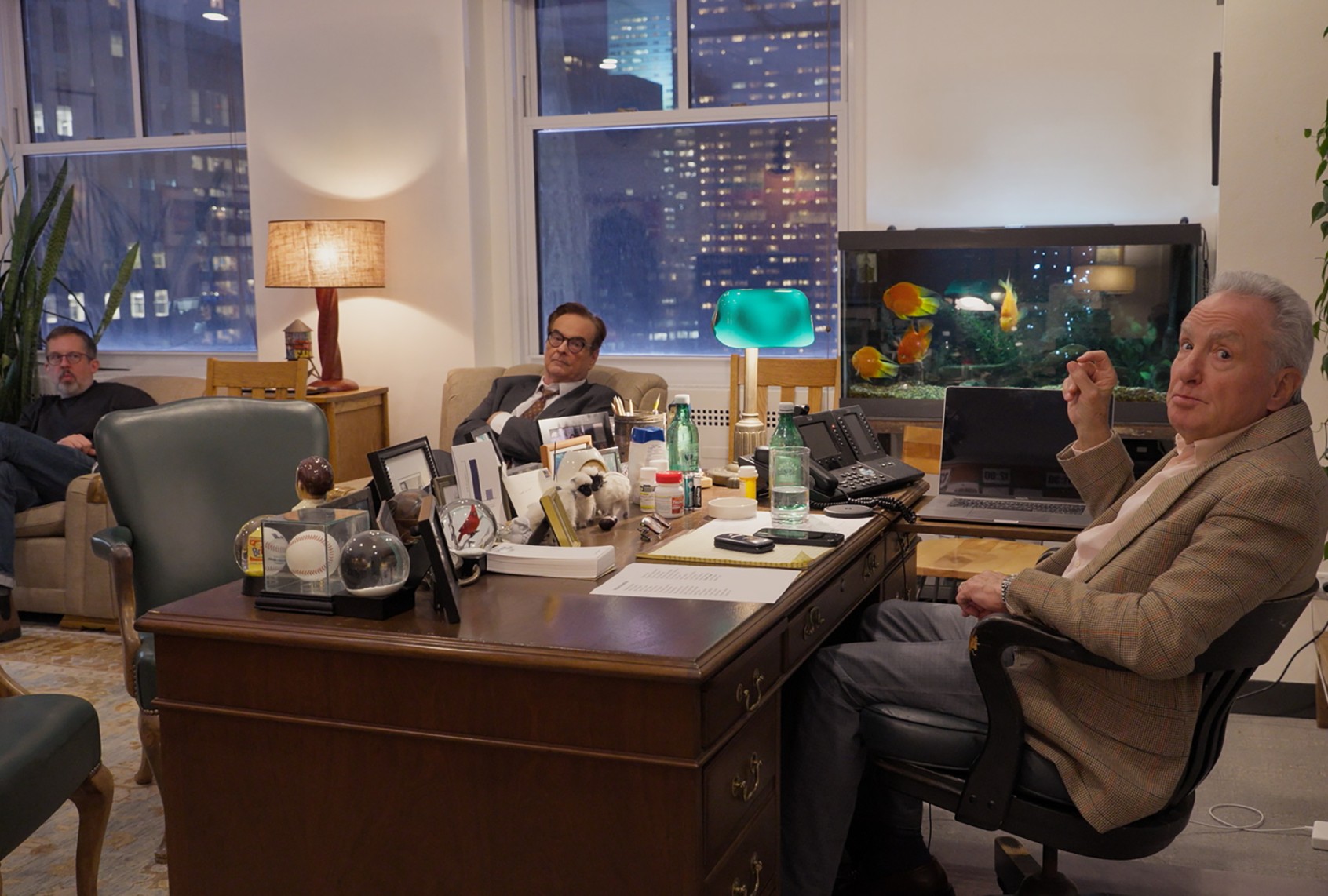
(Focus Features) Erik Kenward, Steve Higgins and Lorne Michaels in director Morgan Neville’s documentary, “Lorne”
We need your help to stay independent
But “Lorne” got me thinking that perhaps this would’ve been my reaction with any era of “SNL.” After all, nothing lasts half a century without changing with the times, and — big shocker — not everything is meant for me, specifically. We may be firmly in the tech age, but even though “SNL” pioneered early viral videos with its digital shorts, the show is still finding its footing as it tries to understand how it fits into a culture where so much of what’s deemed “funny” takes place on a screen. The new franchise across the pond, “Saturday Night Live UK,” initially looked as though it might be an answer for fatigued viewers looking for a refresh, but even that show has stumbled. Though it wouldn’t exactly be fair to write it off, either. As Neville’s documentary reminds us, not everything played so well in the first handful of “SNL” episodes back in 1975. A little bit of breathing room is necessary for any creative entity to establish itself, and the same could be said with this age of “SNL.” And just when I think all of the internet-based bits are cloying, here comes Sarah Sherman dressed as Punch the monkey’s mom with a Betty Boop-meets-Jersey girl accent, and I’m reminded that when “SNL” goes full stupid, it brings me a unique joy that few other things can.
This is what “SNL” does best. As Michaels puts it in the film, the sketches are like confections: they’re not always what you want, but when you’re in the mood for something delicious, you’ll indulge no matter how fleeting the joy is, or how much you beat yourself up for giving in. What Michaels and “SNL” do is play to the American sweet tooth. They give us candy-coated comedy with a surprisingly varied center, full of unexpected twists. It’s just enough to sate the palate until next week, when we find ourselves craving a treat once again. No matter how much we try to resist, curiosity remains. Sometimes, even the memory of the experience is enough to keep us coming back for more.
Read more
about recent documentaries
The post How the “SNL” sausage gets made appeared first on Salon.com.
from Salon.com https://ift.tt/jsqSJpI

 Hello, my name is Asma E Nur. I am a tech blogger.
No comments:
Post a Comment